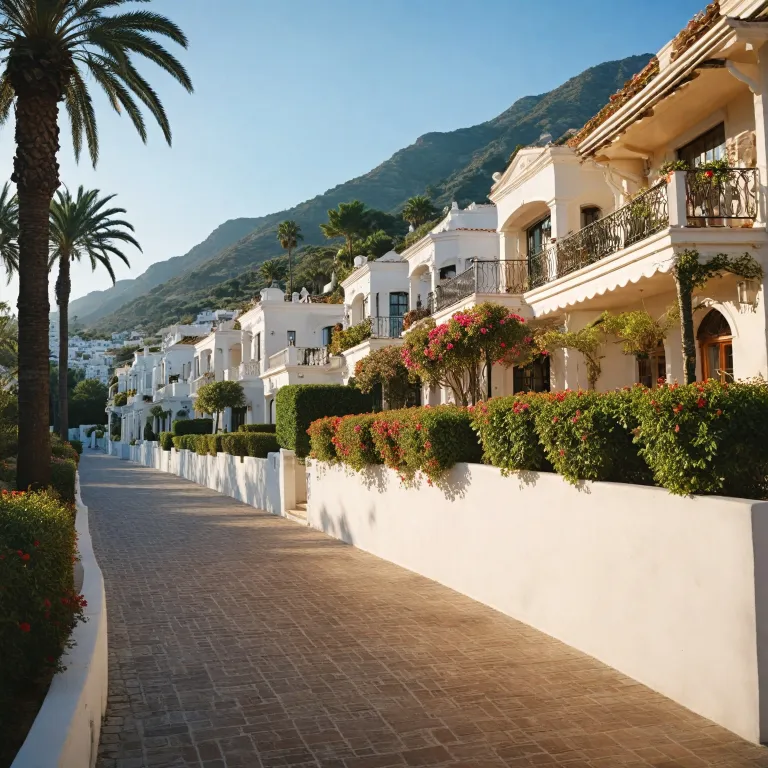
Golden Mile Marbella: where Andalusian heritage meets contemporary luxury
The Golden Mile Marbella is a prestigious coastal mile area that links central Marbella with glamorous Puerto Banus. Along this golden stretch, the mile area blends historic estates, refined resorts, and contemporary properties that define Mediterranean luxury. The location has evolved from a quiet fishing coastline into one of the most coveted areas on the Costa del Sol.
Today, the Golden Mile is a curated lifestyle corridor, where every property feels designed around sea views and privacy. High palm lined avenues lead from the beach to exclusive communities such as Sierra Blanca, Cascada Camojan, and Monte Paraiso, each mile area offering elevated views Mediterranean and strong security. This combination of natural beauty, architectural elegance, and high security has attracted residents from the international business world, European aristocracy, and creative industries.
The presence of landmark resorts such as Marbella Club and Puente Romano reinforces the area’s reputation for refined hospitality. These icons anchor the marbella golden shoreline with manicured gardens, beach clubs, and gourmet restaurants that shape the local lifestyle. King Fahd of Saudi Arabia once owned a palace on the Golden Mile, highlighting the area's appeal to royalty and high-profile individuals.
For travellers choosing a luxury hotel, the Golden Mile Marbella offers a rare balance of tranquillity and access. You are minutes from Marbella’s historic centre, Puerto Banus marina, and the wider Costa del Sol, yet remain cocooned in a discreet residential environment. This makes the mile Marbella area ideal for guests who value both privacy and proximity to the region’s most prestigious attractions.
Staying along the Golden Mile: hotels, resorts, and refined beach clubs
Choosing a hotel on the Golden Mile Marbella means positioning yourself between Marbella’s old town charm and the energy of Puerto Banus. Along this golden corridor, beachfront properties sit beside low rise residences, creating a human scale skyline with generous sea views. Many hotels share the same privileged area, yet each property cultivates a distinct atmosphere and lifestyle.
Marbella Club remains a benchmark for understated luxury, with whitewashed villas, mature gardens, and a legendary beach club that shaped the original marbella golden identity. Nearby, Puente Romano has evolved into a vibrant resort village, where the central plaza, tennis club, and Romano inspired architecture create a lively social hub. The phrase "Notable attractions include the Marbella Club Hotel, Puente Romano Resort, and the 7-kilometer seafront promenade featuring luxury restaurants and beach clubs." captures how these addresses define the mile Marbella experience.
Guests can walk the seafront promenade that connects different areas, passing beach clubs, chiringuitos, and refined lounges that stay active from breakfast to late evening. This mile offers direct access to the sand, with many properties providing private paths, reserved sunbeds, and attentive service. For travellers comparing Spanish destinations, an exclusive hotels and areas guide for San Sebastián offers a useful benchmark for understanding coastal luxury in another region.
Behind the beachfront, the Golden Mile area rises gently towards Sierra Blanca and Cascada Camojan, where hotels and residences enjoy panoramic views Mediterranean. These elevated properties often emphasise wellness, with spa circuits, heated pools, and quiet gardens that contrast with the livelier beach clubs below. When booking, consider whether you prefer immediate beach access or higher vantage points with sweeping sea views and a calmer residential feel.
Understanding Golden Mile neighbourhoods: from beachfront to Sierra Blanca
The Golden Mile Marbella is not a single uniform strip but a mosaic of interconnected areas, each with its own character. At sea level, the beachfront area focuses on resorts, beach clubs, and promenade living, while the inland side hosts villas, gated communities, and discreet luxury apartments. This layered structure allows guests to choose between immersive coastal energy and elevated residential calm within the same mile area.
On the mountainside, Sierra Blanca and Cascada Camojan form two of the most prestigious residential areas on the Costa del Sol. Here, properties sit on generous plots, with high security, landscaped gardens, and commanding sea views that stretch towards Africa on clear days. Monte Paraiso, slightly lower on the hillside, offers a blend of apartment style property and penthouse residences, many with views Mediterranean and quick access down to the Golden Mile.
Closer to the shoreline, the marbella golden corridor includes enclaves around Marbella Club and Puente Romano, where low density properties share lush communal gardens and direct beach access. These areas feel like private parklands, with pathways leading to the promenade, tennis club, and Romano inspired plazas that host international restaurants. Travellers who appreciate historic centres may also enjoy staying in refined districts such as Seville’s old town, where an refined Andalusian stay in Seville offers a complementary urban experience.
For many residents, the appeal of the Golden Mile lies in its balance of community and discretion. You can live or stay in a high security mile area, yet still walk or cycle to the beach, marina, or Marbella’s historic quarter. When evaluating hotels, pay attention to how each property positions itself within these micro areas, as the exact location will shape your daily views, noise levels, and access to services.
Practical hotel booking insights: prices, seasons, and real estate context
Booking a hotel on the Golden Mile Marbella requires understanding both hospitality trends and the underlying real estate market. This golden corridor is one of the most expensive areas on the Costa del Sol, with an average price per square metre around 6 500 € in prime property. That high valuation influences hotel rates, service levels, and the type of guests who frequent the mile Marbella shoreline.
During peak holiday periods, beachfront properties and sea views suites at Marbella Club, Puente Romano, and neighbouring resorts command premium prices. Inland, hotels near Sierra Blanca, Cascada Camojan, and Monte Paraiso may offer slightly better value while still providing high security and panoramic views Mediterranean. Understanding this real estate context helps explain why some mile offers appear significantly higher than similar room categories elsewhere in Spain.
Seasonality also shapes the Golden Mile lifestyle, with beach clubs and outdoor venues operating at full capacity in warmer months. In quieter seasons, the area becomes more residential, and hotels often introduce wellness retreats, gastronomy weekends, and longer stay packages. Travellers seeking adults focused tranquillity may find inspiration in an ultimate guide to exclusive luxury stays in Mallorca, which illustrates how Spanish resorts tailor experiences to specific audiences.
When comparing options, look beyond nightly rates and consider what each property is offering in terms of access, privacy, and on site facilities. Some hotels include entry to tennis clubs, spa circuits, or private sections of the beach, while others focus on residential style suites with kitchenettes and extended stay services. This nuanced approach reflects how the Golden Mile bridges traditional hospitality and real estate, positioning hotels as both short term retreats and gateways into a coveted lifestyle.
Living the Golden Mile lifestyle: gastronomy, wellness, and international amenities
Staying on the Golden Mile Marbella is as much about daily rituals as it is about the hotel room itself. Morning walks along the promenade reveal a golden light over the sea, with residents and guests sharing the same coastal path between Marbella and Puerto Banus. Cafés, beach clubs, and hotel terraces open gradually, creating a relaxed yet refined rhythm that defines the mile golden atmosphere.
Gastronomy is a central pillar of the marbella golden lifestyle, with chefs such as Dani García operating acclaimed restaurants like Leña and Lobito de Mar. Within and around Puente Romano and Marbella Club, guests can move between international concepts, Andalusian classics, and Michelin level dining without leaving the area. This concentration of culinary talent reinforces the Golden Mile’s status as a destination where luxury is expressed through flavour, service, and carefully framed sea views.
Wellness is equally prominent, with hotels and residential clubs offering spa treatments, yoga sessions, and fitness programmes tailored to international residents and travellers. Many properties integrate heated pools, quiet gardens, and wellness suites that overlook the Mediterranean, allowing guests to combine relaxation with views Mediterranean. Families benefit from proximity to at least one respected international school in the wider Marbella area, which supports long term residents and extended stays.
For visitors, these amenities translate into a seamless experience where every element of the mile area supports comfort and security. You can spend the day between beach clubs, tennis courts, and shaded terraces, then return to a high security property that feels both private and connected. This interplay between leisure, gastronomy, and wellbeing is what makes the Golden Mile Marbella more than a simple resort strip ; it is a complete lifestyle ecosystem.
Navigating the Golden Mile: area guide, transport, and booking strategies
Approaching the Golden Mile Marbella with a clear area guide helps you match your hotel choice to your travel style. The coastal road that links Marbella to Puerto Banus runs parallel to the beach, with service roads and residential streets branching towards the sea and the hills. Understanding where your chosen property sits along this axis will influence how you move between areas, from beach clubs to historic streets.
Many guests choose hotels within walking distance of Marbella Club, Puente Romano, or the central promenade, as these locations offer quick access to both marbella golden nightlife and daytime relaxation. Others prefer the elevated calm of Sierra Blanca, Cascada Camojan, or Monte Paraiso, relying on taxis or private drivers to reach Puerto Banus and the old town. In all cases, the mile area benefits from high security measures, well maintained roads, and clear signage along the Costa del Sol corridor.
When booking, consider whether you prioritise immediate beach access, panoramic sea views, or proximity to specific clubs and restaurants. Some properties highlight their relationship with Puente Romano or Marbella Club, while others emphasise real estate style suites that feel closer to private residences. Reading recent guest feedback and consulting a detailed area guide will help you understand how each mile offers aligns with your expectations.
Finally, remember that the Golden Mile is part of a broader Costa del network of destinations, from Malaga to Estepona and beyond. Combining a stay here with time in other Andalusian cities allows you to experience both coastal and urban luxury in a single itinerary. With thoughtful planning, the Golden Mile Marbella becomes not only a glamorous stop but the anchor point of a refined journey through southern Spain.
Key statistics for the Golden Mile Marbella
- Length of the Golden Mile Marbella coastal corridor : approximately 4 miles between central Marbella and Puerto Banus.
- Average price per square metre for prime property in the area : around 6 500 € in leading residential zones.
- Number of Michelin starred restaurants operating in the wider Marbella area : at least 2, reinforcing the region’s culinary prestige.
- Seafront promenade length connected to the Golden Mile : roughly 7 kilometres of continuous coastal walkway.
Frequently asked questions about the Golden Mile Marbella
What is the Golden Mile in Marbella ?
The Golden Mile in Marbella is a prestigious coastal corridor that runs for about 4 miles between central Marbella and Puerto Banus. It is renowned for its luxury properties, high end hotels, and refined beach clubs that attract international residents and travellers. The area combines historic estates, modern resorts, and landscaped promenades to create one of the most exclusive addresses on the Costa del Sol.
What are some notable attractions on the Golden Mile ?
Key attractions along the Golden Mile include the legendary Marbella Club, the lively Puente Romano resort complex, and a 7 kilometre seafront promenade lined with restaurants and beach clubs. Visitors can also access refined tennis facilities, wellness centres, and selected cultural sites such as the nearby Roman villa by the Rio Verde. Together, these attractions create a dense concentration of lifestyle experiences within a relatively compact area.
How has the Golden Mile evolved over time ?
The Golden Mile began as a quiet coastal stretch near a small fishing town and gradually attracted European aristocrats and international investors. Over the decades, it developed into a structured luxury area, with carefully planned real estate, high security communities, and landmark hotels. Today, it stands as a mature destination that continues to evolve through new residential projects and hospitality concepts while retaining its Andalusian character.